
How Long Do Furnaces Last and When to Replace Them
A furnace doesn't usually fail without warning. Bills creep up, rooms stop heating evenly, or it starts making a noise it never used to make. The tricky part is knowing whether that's a quick fix or a sign your furnace is nearing the end of the road. Here's how long a furnace typically lasts, the signs it's time to replace rather than repair, and what to do if yours isn't working right now.
How Long Do Furnaces Last?
Most furnaces last 15 to 20 years, according to Minnesota's state Home Energy Guide, and that tracks with what we see in the field: furnaces that get annual maintenance routinely make it to the higher end of that range, while ones that don't tend to fall short. Furnaces in leaky, poorly insulated homes also run more often and wear out faster, which shortens the timeline further regardless of maintenance. Age alone doesn't tell the whole story, but it's the first thing to check if you're not sure where your furnace stands.
Signs You Need a New Furnace
A few signs point toward replacement rather than another repair:
Your furnace is 15 years or older.
Energy bills are climbing without a change in usage.
Some rooms heat unevenly no matter how you adjust the thermostat.
You've called for repairs more than once in the past year or two.
New banging, screeching, or rattling sounds during operation.
One sign deserves more than a spot on this list. A healthy gas furnace burns with a steady blue flame. If yours looks yellow, orange, or flickering, that can mean incomplete combustion, which produces carbon monoxide as a byproduct. That's not a wait-and-see situation. If you notice a yellow flame, or your carbon monoxide detector goes off, turn off the furnace, get everyone out, and call a technician immediately.
My Furnace Isn't Working, Now What?
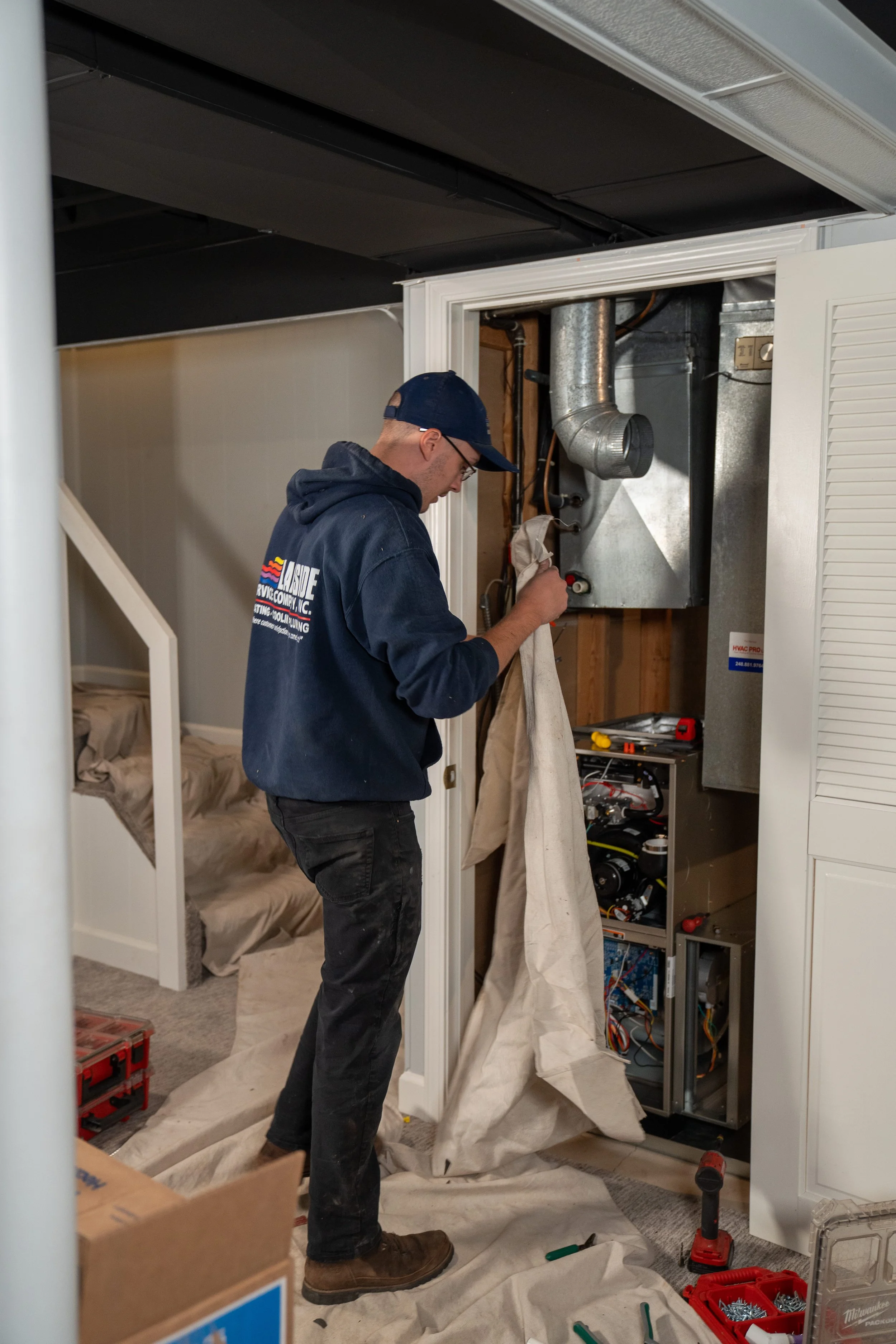
Before assuming the worst, a few quick checks can rule out simple causes. Start with the thermostat: confirm it's set to heat and the target temperature is above the current room temperature. From there, check the breaker for the furnace and the switch that looks like a light switch near the unit, since either one being off will stop the system cold. Older units rely on a pilot light, so confirm it's lit; newer units use an electronic ignitor, so listen for a clicking sound when the system calls for heat. Finally, pull the air filter and take a look. A badly clogged filter can restrict airflow enough to trip the furnace's safety shutoff.
If none of that gets it running again, stop troubleshooting. If you smell gas or see soot around the unit, turn the furnace off and call a technician right away rather than continuing to dig into it yourself.
Repair or Replace?
We generally tell homeowners not to sink money into a furnace once a repair starts approaching a quarter of what a new unit would cost, especially if the furnace already has some years on it. That lines up with Minnesota's state Home Energy Guide, which recommends replacement once a repair reaches roughly 25% of the cost of a new furnace, even if the unit technically has some life left. A furnace needing frequent repairs, particularly in the last couple of years of its expected lifespan, tends to cost more in the long run than replacing it outright.
Efficiency is the other half of the equation. Older furnaces often run at 80% AFUE (Annual Fuel Utilization Efficiency) or lower, while new high-efficiency models reach 95% or higher. That difference shows up directly in your heating bills every winter, not just on a spec sheet.
One thing overrides the cost math entirely: a cracked heat exchanger. That's a safety issue, not a repair decision, and it means replacement, not another patch job.
Ask About Current Financing
If your furnace is nearing the end of its life, Lakeside frequently runs financing offers on new furnace installations. Contact us to ask what's currently available, or schedule a technician to take a look and tell you honestly whether repair or replacement makes more sense for your system.
Frequently Asked Questions
How long do furnaces last? Most furnaces last 15 to 20 years with regular maintenance, according to Minnesota's state Home Energy Guide. Furnaces in poorly insulated homes or those without routine maintenance tend to fall on the shorter end of that range.
What are the signs I need a new furnace? Age of 15 years or more, rising energy bills, uneven heating, frequent repairs, unusual noises, and a yellow rather than steady blue burner flame are all signs it may be time to replace rather than repair your furnace.
Is it worth repairing an old furnace? It depends on the cost. If a repair costs less than about 25% of a new furnace's price and the unit is still reasonably efficient, repairing usually makes sense. Beyond that threshold, or with frequent repairs, replacement is typically the better value.
Why is my furnace not turning on? Common causes include a thermostat set incorrectly, a tripped breaker, a pilot light that's gone out, or a clogged air filter that triggered a safety shutoff. If checking those doesn't solve it, or you smell gas, turn off the furnace and call a technician.
How much of a repair cost means I should replace instead? Minnesota's state Home Energy Guide suggests considering replacement once a repair reaches roughly 25% of the cost of a new furnace. Frequent repairs at any cost, or a cracked heat exchanger, are also signs it's time to replace rather than repair.
