
Hard Water Signs Every Michigan Homeowner Should Know
Ever notice crusty white buildup around your showerhead, or wonder why your soap barely lathers no matter how much you use? That's usually hard water: water carrying a high concentration of dissolved minerals, mainly calcium and magnesium, picked up as it moves through soil and rock. Most water in Michigan tests somewhere between moderately hard and very hard, depending on your source. While hard water isn't a health risk, it can quietly wear down pipes, fixtures, and appliances over time. It's also easy to mistake for a plumbing problem, when the real cause is what's in the water itself. A water softener is usually the fix, and the signs below are the first clue you might need one.
Hard Water Signs in Your Home
A few signs tend to show up together in a hard water home:
White or chalky spots on dishes and glassware, even fresh out of the dishwasher.
Soap and shampoo that won't lather well, no matter how much you use.
Dry, itchy skin or dull, brittle hair after showering.
Stiff, scratchy towels and laundry.
Crusty white buildup around faucets and showerheads.
Hardness is measured in milligrams per liter (mg/L) or grains per gallon (gpg). According to the Maryland Geological Survey, water is classified as soft (0-60 mg/L), moderately hard (61-120 mg/L), hard (121-180 mg/L), or very hard (above 180 mg/L). A home water test tells you exactly where yours falls.
That chalky white residue on shower doors, faucets, and fixtures? Those are hard water stains, mineral deposits left behind as calcium and magnesium settle out when water evaporates. Scrubbing it off works temporarily, but it comes right back because the water causing it hasn't changed. The only way to stop the stains for good is to treat the water before it reaches your fixtures, not just clean up after it.
It's Not Always Hardness: Iron and Other Michigan Water Issues
Hardness isn't the only water quality issue common in Michigan. Iron is also a frequent problem in groundwater here. It stains sinks, tubs, and laundry a reddish-orange, can give water a metallic taste or smell, and also builds up in pipes and fixtures over time much like hardness does. If you're noticing any of that, get your water tested for iron specifically, since removing it takes a dedicated iron filter, not a standard water softener.
Taste, odor, or specific contaminants like nitrates or arsenic (more common questions for homes on well water) point to a different issue again, usually solved with a reverse osmosis or drinking water system rather than a softener or iron filter. Either way, a water test tells you which of these you're actually dealing with, instead of guessing at a fix.
What a Water Softener Fixes
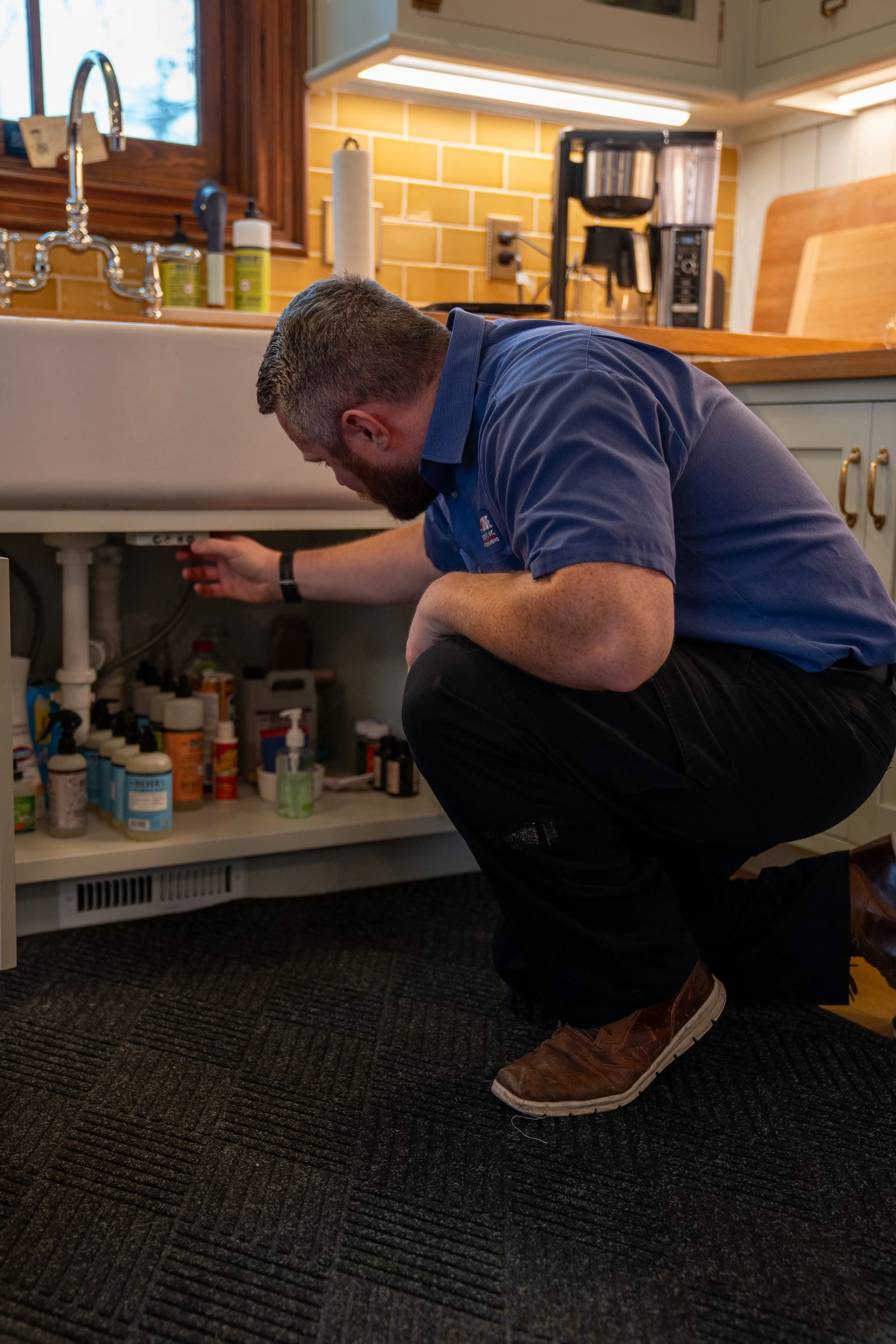
A water softener uses ion exchange to replace the calcium and magnesium in your water with sodium, which eliminates scale, restores normal soap lathering, and protects your pipes, fixtures, and water heater from mineral buildup over time.
This applies whether your home is on well water or a municipal supply. City water can carry plenty of hardness too, which is why softeners built specifically for city water exist alongside the well-water versions.
A test strip from the hardware store gives you a rough idea, but it won't catch iron, sediment, or other contaminants that need a different fix entirely. A professional water analysis identifies exactly what's in your water, so you're treating the actual problem instead of guessing.
Lakeside offers a free water analysis to homeowners in Livingston County, Novi, and Ann Arbor. If you're seeing any of the signs above, that's the fastest way to find out what's actually going on with your water.
Frequently Asked Questions
What are the most common signs of hard water? The most common signs are white spots on dishes and glassware, soap that won't lather well, dry skin and hair after showering, stiff laundry, and chalky buildup around faucets and showerheads. If you're noticing several of these at once, hard water is a likely cause.
Is hard water bad for my health? No, hard water isn't considered a health risk. The calcium and magnesium it contains aren't harmful to drink. The issues it causes are practical ones, like scale buildup, reduced soap effectiveness, and wear on plumbing and appliances over time.
How is hard water measured? Hardness is measured in milligrams per liter (mg/L) or grains per gallon (gpg), based on the concentration of calcium and magnesium. Water is generally classified as soft, moderately hard, hard, or very hard depending on where it falls on that scale.
Do I need a water softener if I'm on city water? Possibly. Municipal water can still carry significant hardness depending on the source. A water test is the only way to know for sure, and softeners designed specifically for city water are available if treatment is needed.
What's the difference between hard water and iron in water? Hardness comes from calcium and magnesium and causes scale and soap issues. Iron is a separate mineral common in Michigan groundwater that causes reddish-orange staining and a metallic taste or smell. Iron requires a dedicated iron filter rather than a standard water softener.
