
Stay Prepared With an Air Purifier for Wildfire Smoke
Michigan issued 31 statewide air quality alert days in 2025, matching the total from 2023, and Canadian wildfire smoke was behind most of them, according to EGLE. Closing your windows during a smoke event helps, but it isn't enough on its own. Here's what actually filters wildfire smoke out of your indoor air, and what to look for in an air purifier for wildfire smoke.
Does Wildfire Smoke Really Get Inside Your House?

Yes, even with the windows shut. Fine smoke particles, known as PM2.5, are small enough to work their way in through door gaps, window seals, and your home's air intake. The EPA notes that during smoke events, indoor PM2.5 levels typically run lower than outdoor levels when doors and windows stay closed, but they're still noticeably higher than on a normal day.
Does Your AC Filter Out Wildfire Smoke?
Not on its own, at least not completely. A standard 1-inch HVAC filter (usually rated MERV 8 to 11) catches larger particles like dust and pollen well, but fine wildfire smoke particles are small enough to slip through a lot of that filtration. Running your AC keeps your home cool, but it isn't designed to be your primary defense against smoke.
What MERV Rating Do You Need for Smoke?
The EPA recommends a MERV-13 or higher filter in your HVAC system during smoke events, since that rating captures a much higher percentage of fine particles than a standard filter.
Before you upgrade, check whether your system can actually handle it. A filter rated too high for your equipment restricts airflow the same way a clogged filter does, which can strain your system instead of helping it. Ask your HVAC technician before installing anything higher-rated than what your system is built for.
What to Look for in an Air Purifier for Wildfire Smoke
A whole-home or portable air purifier is the more reliable option during a smoke event, since it's built specifically to pull fine particles out of the air rather than just filtering what passes through your ductwork. A few things matter more than the price tag:
True HEPA filtration, which is rated to capture at least 99.97% of particles at 0.3 microns, well within the range of wildfire smoke particles.
The right size for the room or the whole home. An undersized unit won't keep up during a heavy smoke event.
No ozone generation. The EPA specifically warns against ozone-generating air cleaners, since ozone is a lung irritant on its own.
A CADR (Clean Air Delivery Rate) that matches the square footage you're trying to cover.
If you're deciding between a portable unit and a whole-home system tied into your HVAC, that's worth a conversation with a technician who can look at your specific home and ductwork rather than guessing from a product label.
How to Keep Smoke Out of Your House
Close windows and doors, and skip the single-hose portable air conditioner during heavy smoke, since it can pull more smoke in from outside. A window unit or central AC is a better choice for staying cool without drawing in outside air.
The EPA calls this a clean room: one room in the house with as few windows and doors as possible, where you run a properly sized air purifier continuously on its highest safe setting. It's a straightforward way to guarantee at least one space in the house stays genuinely clean, even if smoke works its way into the rest of it.
Hold off on frying food, vacuuming, or burning candles during a smoke event. All three add particles to indoor air that a purifier then has to work harder to remove.
When to Check Michigan's Air Quality Alerts
The Michigan Department of Environment, Great Lakes, and Energy (EGLE) issues statewide alerts whenever wildfire smoke is expected to push air quality into unhealthy territory. You can check current conditions anytime at Michigan.gov/MiAir or sign up for alerts by ZIP code through AirNow.gov. With Michigan's wildfire-smoke summers becoming a repeat pattern rather than a one-off, it's worth checking before you plan a day outdoors.
Lakeside Gets Your Home Ready
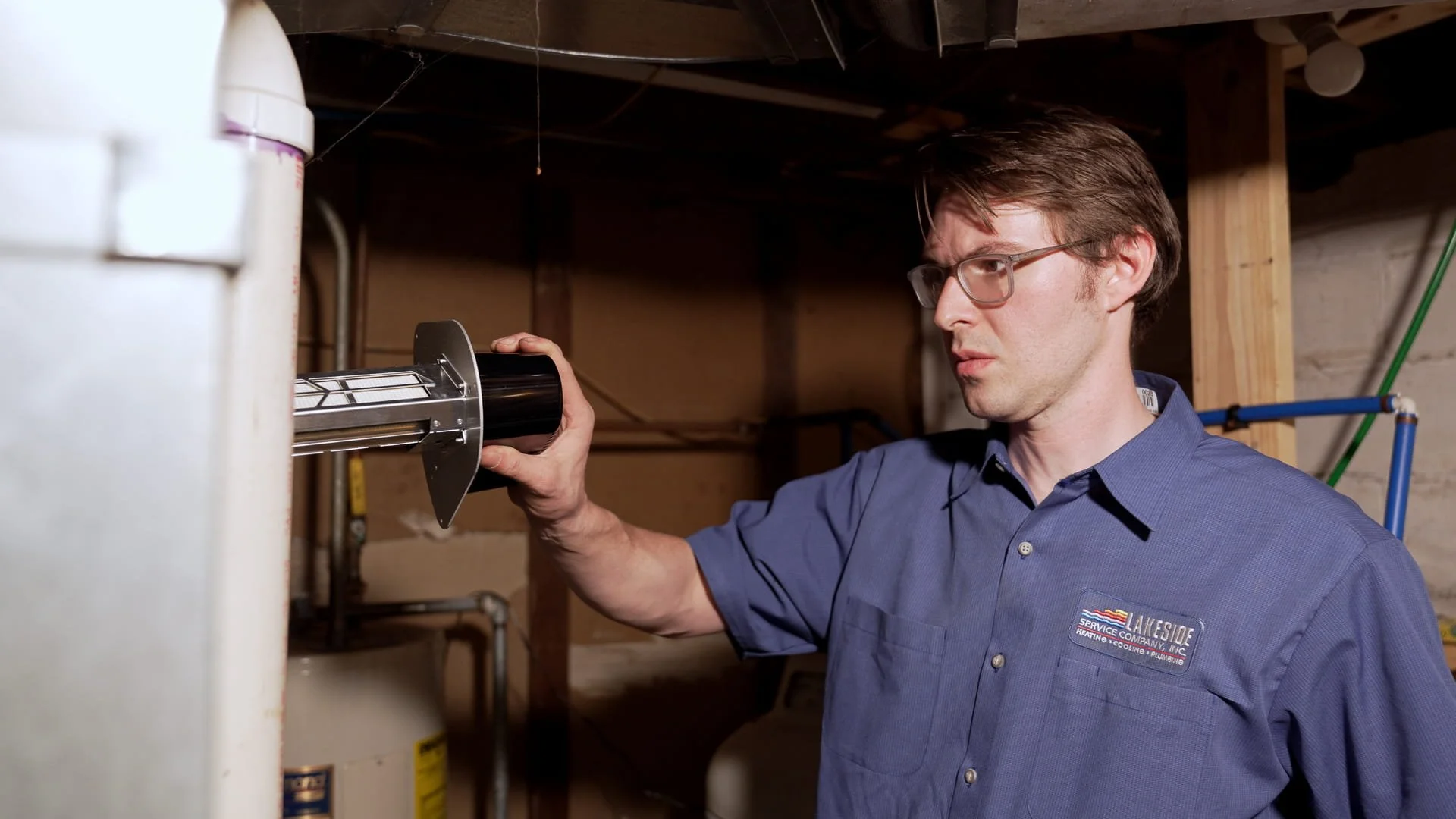
Lakeside installs and services whole-home indoor air quality solutions, including air purification systems sized correctly for your home. Members of Lakeside's Membership Club also get priority scheduling if a smoke event hits and you need a system checked fast.
Call 810-355-2630 or schedule online to talk through the right air purifier for wildfire smoke for your home.
Frequently Asked Questions
Can wildfire smoke get inside my house even with windows closed? Yes. Fine smoke particles (PM2.5) are small enough to enter through door gaps, window seals, and HVAC intakes. Indoor levels are usually lower than outdoor levels when doors and windows are closed, but they still rise noticeably during a smoke event.
What MERV rating do I need to filter wildfire smoke? The EPA recommends a MERV-13 filter or higher for HVAC systems during wildfire smoke events. Check with an HVAC technician first, since a filter rated too high for your system can restrict airflow and strain your equipment.
Does my air conditioner filter out smoke? Only partially. Standard 1-inch filters (MERV 8 to 11) catch larger particles like dust and pollen but let a significant share of fine smoke particles through. A dedicated air purifier with true HEPA filtration is a more reliable option during heavy smoke.
Are ozone air purifiers safe to use during wildfire smoke events? No. The EPA specifically warns against ozone-generating air cleaners, since ozone itself irritates the lungs. Look for true HEPA filtration instead, which removes particles without producing ozone.
How do I know when there's an air quality alert in Michigan? The Michigan Department of Environment, Great Lakes, and Energy (EGLE) issues statewide alerts during wildfire smoke events, viewable at Michigan.gov/MiAir. You can also sign up for ZIP code-based alerts through AirNow.gov to get notified before smoke reaches your area.
