
Why Your Portable Air Purifier Isn’t Fixing Your Pet Allergies
You love your pet. You just wish your eyes didn't water every time they curl up next to you. If you've already tried vacuuming more, running a portable air purifier, or just living with it, you're not out of options. Pet dander is smaller and more persistent than most people realize, which is exactly why those fixes fall short. Here's what pet dander actually is, why the usual workarounds don't keep up with it, and what to actually look for in an air purifier for pet dander.
What Pet Dander Actually Is
Pet dander isn't fur. It's tiny bits of skin, along with proteins in saliva and urine, that your immune system reacts to. According to the National Institute of Environmental Health Sciences, these allergen proteins are shed constantly by any animal with fur or feathers, which is why even short-haired pets can trigger just as strong a reaction as long-haired ones.
Dander particles are tiny, small enough that they don't settle the way dust or crumbs do. Instead they stay suspended in the air for hours, circulating through every room your HVAC system reaches, which is part of why allergy symptoms can flare up even in rooms your pet rarely enters.
Why Vacuuming and Air Fresheners Aren't Enough
Regular cleaning helps, but it's fighting a losing battle on its own. Vacuuming picks up dander that's already settled on carpet and furniture, but your pet is generating new dander constantly, and a portion of it never lands anywhere, it just keeps circulating. Air fresheners and scented candles don't address dander at all; they just add another layer of scent on top of air that's still carrying the allergen.
The real fix has to work on the air itself, continuously, not just the surfaces you can see.
What to Look For in an Air Purifier for Pet Dander
This is where a lot of people go wrong: grabbing a portable air purifier for the living room and expecting it to solve a whole-house problem. A portable unit only cleans the air in the room it's sitting in, so the bedroom, the hallway, and everywhere else your pet's dander travels goes untreated.
The better answer is an in-duct air purification system, installed directly into your ductwork, so it treats every cubic foot of air that passes through your HVAC system rather than the air in one room. Lakeside installs RGF's HALO-LED and REME HALO systems, which use ionization to charge airborne particles, including dander, dust, and pollen, causing them to clump together and become heavier. That makes them easier for your existing HVAC filter to actually catch, instead of drifting through it and staying airborne.
We see this play out often: a homeowner has already swapped filters two or three times without much change, and the real issue was never the filter, it was that nothing was treating the air outside the one room a portable unit was sitting in. Ionization technology can produce ozone as a byproduct if it's not built carefully, which is why we stick with HALO-LED and REME HALO Zero specifically, both are independently verified to the UL 2998 zero-ozone standard, so that's one less thing to worry about.
Best Air Purifier for Pet Allergies: Whole-Home vs. Portable
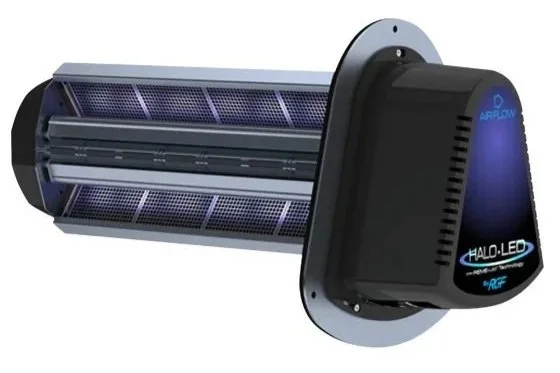
If you're comparing options, the honest answer is that in-duct and portable units solve different problems. A portable HEPA unit can help in a single room, a home office or a bedroom, if that's genuinely the only space that matters to you. But most households don't confine their pet to one room, which means a portable unit is treating a fraction of the actual exposure.
A system tied into your HVAC handles the entire house from one install, requires no remembering to turn it on, and, because it's filtering air that's already moving through ductwork your system relies on anyway, it doesn't add noise or take up floor space the way a portable unit does.
Getting It Installed Right
Filtration equipment is only as good as the system it's installed in. Sizing matters, an undersized unit won't keep up with your home's actual airflow, and installation quality affects whether it's treating air the way it's supposed to.
As a Carrier and Honeywell dealer, Lakeside installs indoor air quality equipment, including HALO-LED and REME HALO systems, sized and installed correctly for your specific home and HVAC system, rather than a one-size-fits-all portable unit.
If pet allergies are a daily struggle in your home, schedule a consultation and Lakeside will help you find the right air purifier for pet dander for your specific home, not just whatever's on the shelf at the hardware store.
Frequently Asked Questions
What's the difference between pet dander and pet hair? Pet hair itself isn't the allergen. The actual trigger is dander, tiny bits of skin, along with proteins in saliva and urine that cling to fur and become airborne. That's why some "hypoallergenic" breeds still cause reactions: they shed less hair, but they still produce dander.
Can a portable air purifier handle pet allergies? A portable air purifier can help in the one room it's placed in, but it does nothing for the rest of the house. Since pet dander circulates through your whole home via your HVAC system, a portable unit only addresses a fraction of your actual exposure.
What kind of filter is best for pet dander? Standard filters catch some dander on their own, but an in-duct ionization system like HALO-LED or REME HALO charges dander particles so they clump together and become larger, which makes your existing filter significantly better at catching them. The two working together outperforms either one alone.
How quickly will an air purifier reduce pet allergy symptoms? Improvement typically shows up gradually over days to weeks as circulating dander gets filtered out and existing dander gets cleaned up through normal vacuuming. It's not instant, since the air purifier addresses ongoing exposure, not dander that's already settled on surfaces.
Does a whole-home air purifier work for multiple pets? Yes, and it's often more effective for multi-pet households specifically, since more pets mean more dander being generated continuously throughout the house. An in-duct system scales with your home's square footage rather than needing multiple portable units placed strategically.
Is ionization air purification safe to use at home? Ionization technology has the potential to produce ozone as a byproduct, which is why the EPA recommends choosing a device verified to a zero-ozone standard (UL 2998). Both HALO-LED and REME HALO Zero, which Lakeside installs, are independently verified ozone-free to that standard.