
On a cold Michigan morning, if you find yourself standing in front of a faucet that gives you a trickle and then nothing, you probably already suspect what's wrong: a frozen pipe. That means water inside the pipe has turned to ice and is blocking the flow, and because ice takes up more room than water does, the pressure it builds can split the pipe inside a wall, under a floor, or in a crawl space. This guide covers what to do in the first few minutes, how to thaw a pipe safely, when to stop and call a plumber, and how to keep it from happening again, starting with why a frozen pipe can't wait.
Frozen Pipes Are an Emergency
A frozen pipe is an inconvenience and a problem you need to deal with, but a burst pipe can be even worse, and insurance claims show how fast the cost adds up. State Farm paid more than $628 million on over 20,000 frozen pipe and winter water damage claims from 2024 through June 2025, and the average payment topped $30,000. Pipes in uninsulated spaces like attics, crawl spaces, and exterior walls are most at risk when temperatures drop below 20°F.
The damage spreads into drywall, flooring, and insulation, and the cleanup usually costs far more than the pipe itself. The Michigan Committee for Severe Weather Awareness estimates 250,000 homes are damaged by frozen water pipes each winter, and a crack as small as an eighth of an inch can leak up to 250 gallons of water a day.
What to Do Right Away
Start here while you work out where the freeze is:
Leave the affected faucet open. Water starts flowing as the ice melts, and running water helps melt the rest. If you're on a well and still have a trickle, let it keep running a little so the line doesn't freeze solid.
Find your main water shutoff. If a pipe bursts, shut off the main valve and leave the faucets open.
Keep electrical appliances away from standing water. Standing water near an electrical appliance is an electrocution risk.
How to Thaw Frozen Pipes Safely
To thaw a frozen pipe, keep the faucet open and apply heat, starting near the faucet and working toward the frozen section. That's the approach in the American Red Cross's guide.
Find the frozen section. It's most likely along an exterior wall, where the water service enters the house through the foundation, or in an unheated space like a basement, crawl space, attic, garage, or kitchen cabinet.
Warm the pipe with an electric heating pad wrapped around it, a hair dryer, a space heater kept away from anything flammable, or towels soaked in hot water.
Work from the faucet toward the frozen section, and keep the hair dryer away from standing water.
Keep applying heat until full water pressure returns.
Check the other faucets in the house for more frozen pipes.
Never use a blowtorch, kerosene or propane heater, charcoal stove, or any other open flame. Open flame near pipes is a fire hazard.
When to Call an Emergency Plumber
Call a licensed plumber if any of these are true:
You can't find the frozen section.
The pipe is behind a wall, under a floor, or somewhere else you can't reach.
You've applied heat and the pipe still won't thaw.
A pipe has burst or you see water where it shouldn't be.
The faucets run dry and you can't tell why.
Lakeside's licensed plumbers handle pipe repair and emergency service across Livingston County, Washtenaw County, and Western Oakland County. If you can see water where it shouldn't be, shut off the main valve first, then call 810-355-2630 or schedule plumbing service. A burst pipe keeps adding to what has to be dried out and replaced for as long as it runs. For the other warning signs that mean a plumber, see our list of common plumbing problems.
How to Keep Pipes From Freezing Again
A few habits protect most homes through a cold snap:
Let a faucet drip, or run a slow trickle, when it's bitterly cold. Running water, even at a trickle, helps prevent freezing.
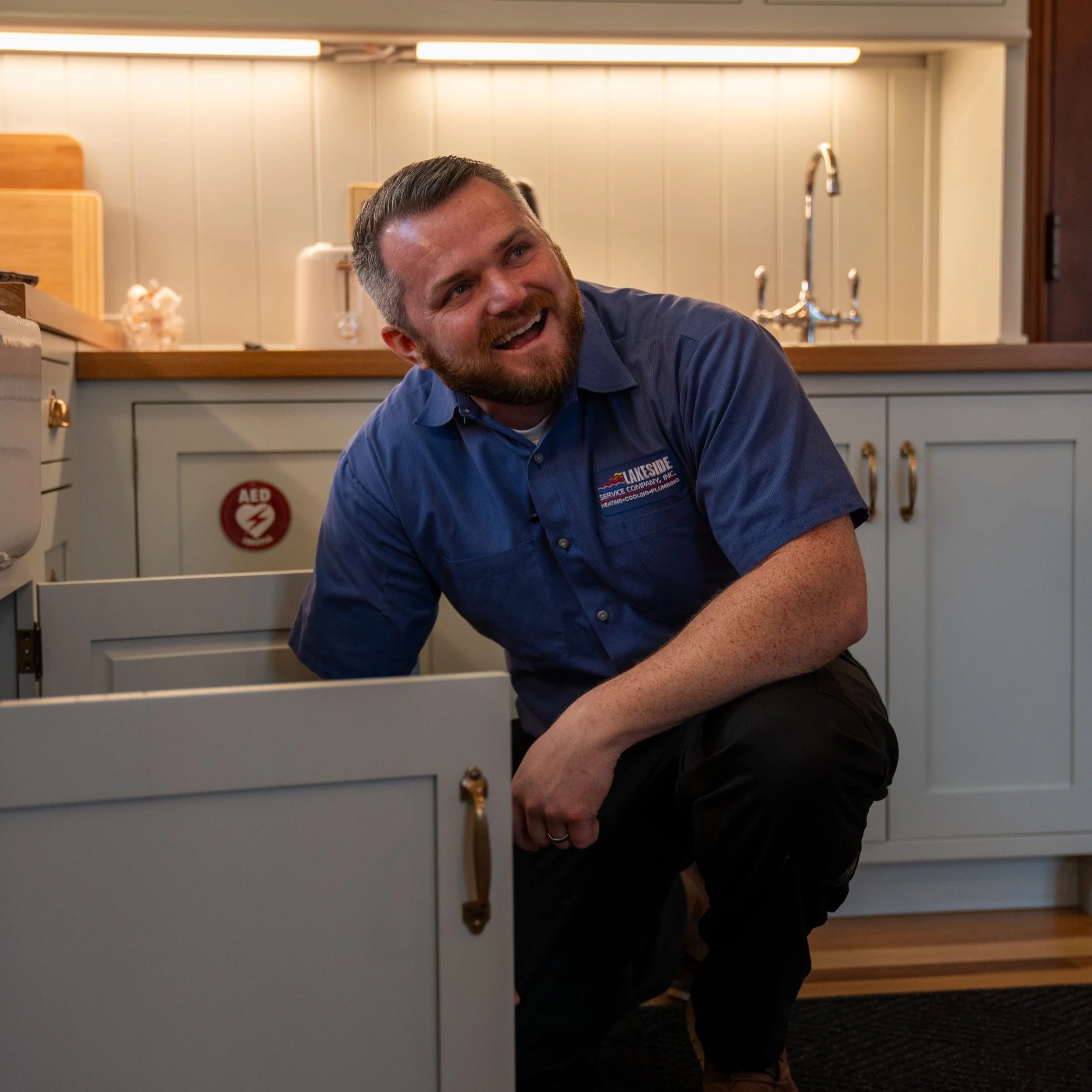
Open the cabinet doors under kitchen and bathroom sinks, especially on exterior walls, so warm air can reach the pipes. Move cleaners and chemicals out of children's reach first.
Keep the thermostat at the same temperature day and night, and no lower than 55°F. Skipping the lower nighttime setting may raise your heating bill, but it costs far less than a burst pipe.
Keep the garage door closed if there are water supply lines in the garage.
Insulate hot and cold water pipes in unheated areas like garages, basements, crawl spaces, and under cabinets with pipe sleeves or UL-listed heat tape, and seal leaks that let cold air in.
Winterizing Outdoor Faucets
Outdoor hose bibs are among the pipes that freeze most often. The same Red Cross guide lays out how to shut them down for winter:
Disconnect, drain, and store outdoor hoses.
Close the inside valve that supplies the outdoor hose bib.
Open the outside hose bib so any remaining water can drain.
Leave the outside valve open so any water left in the pipe has room to expand without breaking it.
Keep the Heat On, Even When You're Away
If you'll be gone during cold weather, leave the heat on and keep it at or above that 55°F floor. A house without heat is how pipes freeze, so if your furnace is on its way out, don't wait for the cold to find out and call for heating service.
A WiFi thermostat makes it easier to keep an eye on things. Lakeside is a Nest Pro and installs WiFi thermostats you can adjust from your phone, anytime and anywhere. A Nest thermostat's safety temperature turns on the heat even when the thermostat is set to Off and sends a notification to your phone when it steps in, as long as your Wi-Fi is up at the time.
Frequently Asked Questions
What should I do first if my pipes freeze? Open the affected faucet and leave it open, then find your main water shutoff in case a pipe has burst. Apply heat to the frozen section, starting near the faucet, and never use an open flame. If you can't find, reach, or thaw the frozen section, call a licensed plumber.
At what temperature do pipes freeze? Water freezes at 32°F, but pipes in uninsulated spaces such as attics, crawl spaces, and exterior walls are most at risk when temperatures drop below 20°F. Insulation, a warm house, and a slow drip from the faucet all lower the odds that a pipe gets cold enough to freeze.
Is it safe to thaw a frozen pipe with a hair dryer? Yes, used carefully. Keep the faucet open, start near the faucet, move toward the frozen section, and keep the hair dryer away from standing water. A heating pad or towels soaked in hot water also work. Never use a blowtorch, propane or kerosene heater, charcoal stove, or other open flame.
Should I let my faucets drip? During very cold weather, yes. Running water, even a trickle, helps prevent freezing, so let a faucet served by exposed pipes drip overnight. Pair it with open cabinet doors under sinks on exterior walls and a steady thermostat setting.
When should I call a plumber for a frozen pipe? Call a licensed plumber if you can't find the frozen section, can't reach it, or can't thaw it. Call right away if a pipe has burst or your faucets run dry. If a pipe has burst, shut off the main water valve first and leave the faucets open.
