
AC Maintenance Checklist for Michigan Homeowners
If your AC is going to fail, it usually fails on the hottest day of the year. The good news is that most breakdowns are preventable. A consistent AC maintenance checklist catches small problems before they turn into expensive repairs, and in Michigan, where summer humidity can push your system hard for months, staying ahead of it matters.
This checklist covers what you can handle yourself and what needs a licensed technician. Work through both sides once a year, ideally before cooling season starts.
What You Can Do Yourself
These tasks don't require tools or technical knowledge. Most take less than 15 minutes.
1. Replace Your Air Filter

Check your filter every 30 days during cooling season. A clogged filter restricts airflow, forces your system to work harder, and is one of the leading causes of AC underperformance. Standard 1-inch filters should be replaced every one to three months. If you have pets or anyone in your home has allergies, replace it monthly.
Not sure what size you need? The filter size is printed on the frame of your current one.
2. Clear the Area Around Your Outdoor Unit
Your condenser unit needs at least two feet of clearance on all sides to release heat efficiently. Trim back any overgrown shrubs, remove leaves and grass clippings, and clear anything that has piled up around it over the winter and spring. Livingston County homeowners also deal with cottonwood fluff in late spring. If it's packed into the fins, a gentle rinse with a garden hose will clear it. Don't use a pressure washer.
3. Check Your Vents and Registers
Walk through every room and confirm that supply vents are open and unobstructed. Furniture, rugs, and curtains pushed against a vent reduce airflow enough to affect comfort and strain your system. This takes five minutes and costs nothing.
4. Test Your Thermostat
Set the thermostat to cool and lower the temperature below the current room temperature. Give the system a few minutes to respond. Confirm the fan is set to "auto," not "on." If the system doesn't kick on, check whether the batteries need to be replaced before assuming there's a bigger problem.
5. Inspect the Condensate Drain Line
Your AC removes humidity from the air and drains that moisture through a condensate line. Over time, algae and debris can clog it, causing water to back up and potentially damage your system or your home. Locate the drain line (usually a white PVC pipe near the indoor unit) and pour a cup of distilled white vinegar through it once a season to keep it clear.
6. Look for Ice on the System
Before you start running your AC regularly for the season, take a look at the refrigerant lines running from your outdoor unit and at the indoor air handler. Ice on either means something is restricting airflow or refrigerant levels are off. If you see ice, don't run the system until a technician takes a look. We cover this in more detail in our post on why your AC runs but won't cool.
What a Technician Should Handle Annually
The items below require equipment, certifications, or technical knowledge that go beyond DIY. This is what a professional AC tune-up covers.
1. Refrigerant Level Check
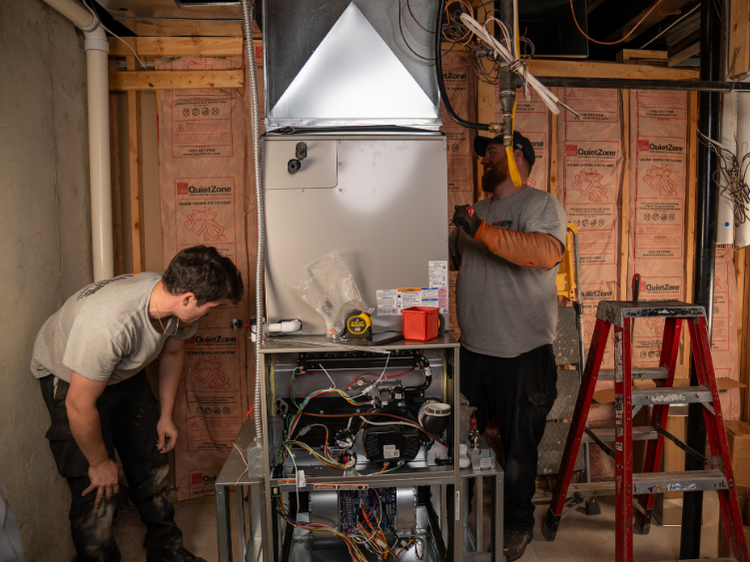
Low refrigerant almost always means a leak somewhere in the system. A technician will check the refrigerant charge and inspect for leaks. Refrigerant handling requires EPA certification and is never a DIY task.
2. Evaporator and Condenser Coil Cleaning
Dirty coils force your system to work harder and reduce its ability to cool effectively. A technician will clean both coils as part of a standard tune-up, something that can't be done thoroughly without proper equipment.
3. Electrical Component Inspection
Capacitors, contactors, and wiring connections degrade over time. A failing capacitor is one of the most common causes of AC breakdowns in summer. A technician will test and inspect these components and replace anything showing early signs of wear before it fails mid-season.
4. Blower and Motor Inspection
The blower moves conditioned air through your home. A technician will check the motor, clean the blower wheel if needed, and verify airflow is within the system's design specs.
5. Thermostat Calibration
A thermostat that reads a degree or two off causes your system to run longer than it should. A technician will verify calibration and confirm the system is cycling correctly.
6. Overall System Performance Check
At the end of a tune-up, a technician will run the system and measure temperature differential, which is the difference between the air going into the return and the air coming out of the supply vents. A properly functioning system should produce a differential of 16 to 22 degrees Fahrenheit. If it's outside that range, something needs attention.
When to Schedule Your Annual Tune-Up
Spring is the right time, before you need the system running daily. Once temperatures climb in June and July, HVAC companies in Livingston County get busy fast. Scheduling in April or May means you get the appointment you want and you're not scrambling during a heat wave.
Lakeside's Membership Club takes the scheduling off your plate entirely. Members get annual maintenance covered, priority service response, discounts on repairs, and same-day service on higher-tier plans, starting at $5 a month.
Frequently Asked Questions
How often should I service my AC in Michigan? Once a year is the minimum, ideally in the spring before the cooling season starts. According to the U.S. Department of Energy, regular maintenance keeps your system running efficiently and helps prevent the most common causes of cooling failure.
What does an AC tune-up include? A standard tune-up covers refrigerant level check, coil cleaning, electrical component inspection, blower and motor check, thermostat calibration, and a full system performance test. The DIY portion, including filter, vents, and outdoor unit clearance, should be done by the homeowner before the technician arrives.
How long does an AC tune-up take? Most tune-ups take one to two hours, depending on the system and what the technician finds. If repairs are needed, that time increases.
Can I skip the annual tune-up if my AC seems to be running fine? Most AC problems develop gradually and aren't obvious until the system fails. A tune-up is how a technician catches refrigerant issues, worn capacitors, and dirty coils before they cause a breakdown, usually on the hottest day of the year.
How much does an AC tune-up cost in Michigan? Tune-up pricing varies by provider. With Lakeside's Membership Club, maintenance is included in the monthly plan cost, which starts at $5 per month.
